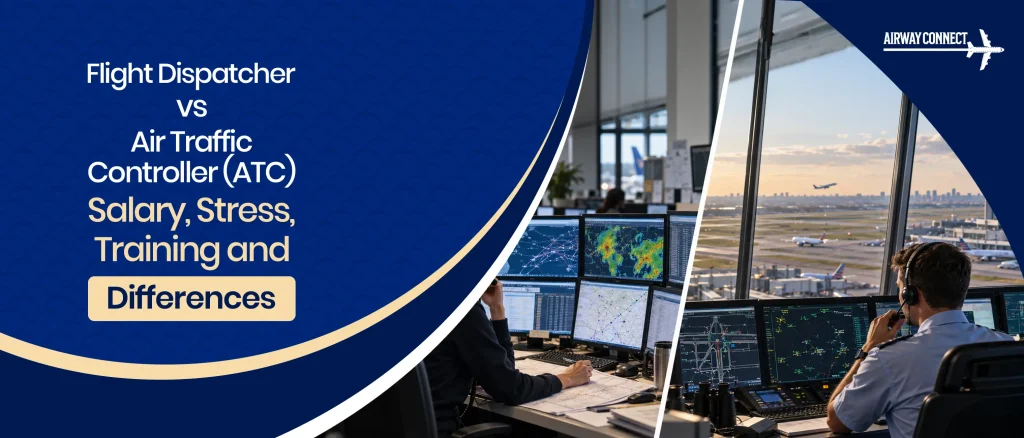
Flight dispatchers plan and monitor airline flights, sharing defined operational responsibilities with pilots in applicable operations. Air traffic controllers issue clearances and manage aircraft separation within their assigned airspace or airport movement areas.
The flight dispatcher vs air traffic controller decision involves salary progression, eligibility, training risk, and the pressure you handle well.
What Does Each Aviation Professional Actually Do?
The central flight dispatcher vs air traffic controller difference is the decision each professional makes. Dispatchers assess whether an airline flight can operate safely under its plan, while controllers manage aircraft movements through the system.
Flight Dispatchers Work Within Airline Operational Control
In Part 121 domestic and flag operations, dispatchers and pilots share specified preflight planning, delay, and dispatch-release responsibilities. Dispatchers continue monitoring flights, communicating safety information, and reassessing plans when conditions change.
Daily flight dispatcher responsibilities include evaluating weather, fuel, airport restrictions, and aircraft limitations. Part 121 supplemental operations and Part 135 positions use different operational-control arrangements, so the actual duties need checking against company procedures.
Air Traffic Controllers Manage Traffic and Separation
Tower controllers manage traffic around airports and on designated movement areas. Approach controllers handle terminal traffic, and en route controllers manage aircraft across larger airspace sectors. Each position has defined responsibilities and qualifications.
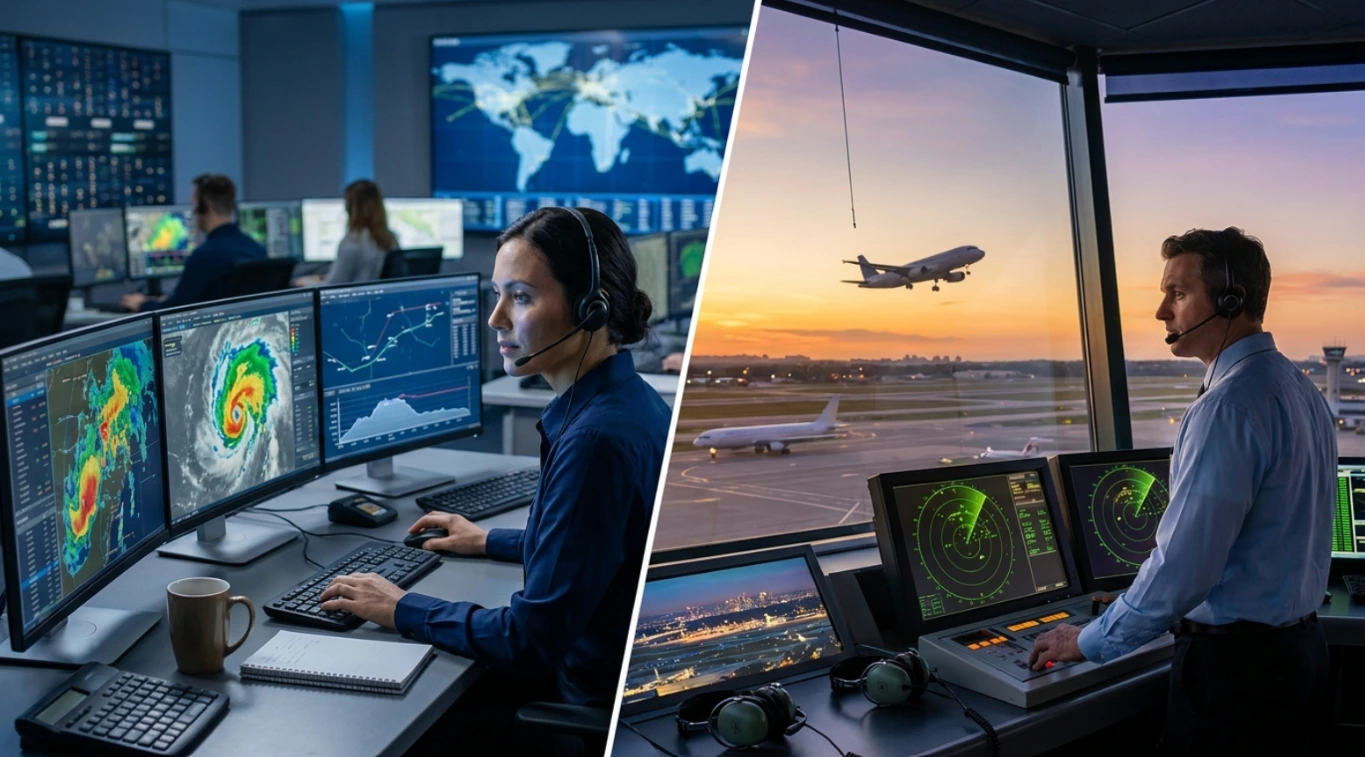
A useful flight dispatcher vs air traffic controller comparison follows one disrupted flight. The dispatcher may assess a diversion airport and fuel consequences, while the controller coordinates the aircraft’s clearance and separation from surrounding traffic.
| Career factor | Flight dispatcher | Air traffic controller |
|---|---|---|
| Main operational focus | Airline flight planning, release, and monitoring | Aircraft separation and traffic flow |
| Typical workplace | Airline operations control center | Tower, approach facility, or en route center |
| Main working contacts | Pilots, maintenance, and airline operations teams | Pilots and other controllers |
| Qualification route | FAA dispatcher certificate plus employer qualification for applicable duties | FAA selection and training route, followed by facility qualification |
| Pressure during disruption | Reassessing flight plans across an assigned workload | Managing changing aircraft movements within an assigned position |
| Scheduling consideration | Airline roster, seniority, and overtime provisions | Facility roster, staffing, and applicable scheduling rules |
Salary: What Do Dispatchers and Controllers Earn?
Salary is often the first flight dispatcher vs air traffic controller search. Compare the same career stage and pay basis, because a national occupational median and one employer’s starting rate measure different things.
The Current ATC Salary Benchmark
The Bureau of Labor Statistics reports a $148,080 median annual ATC wage for May 2025. That median represents workers across the occupation. It is not a starting offer. The FAA’s current recruitment information separately lists Academy training pay at $22.61 per hour, with health and housing benefits.
Flight Dispatcher Pay Depends on the Airline
SkyWest’s published dispatcher career information lists starting base pay of $23.23 per hour, beginning with training. At 2,080 paid hours, that equals approximately $48,318 annually before overtime, premiums, or other compensation.
The annual figure is an illustration of hourly pay multiplied by assumed hours. Actual earnings depend on the employer’s roster, paid hours, training arrangements, contract provisions, and any additional compensation earned.
A fair flight dispatcher vs air traffic control comparison starts with pay at similar career stages. Check the airline’s starting rate and salary progression before comparing its figures with controller earnings.
Compare the First Offer and the Progression
The salary question in flight dispatcher vs air traffic controller requires several checks. Record starting pay, the time needed to qualify, expected paid hours, and the conditions governing later increases before estimating income.
- Separate base pay from overtime, bonuses, and shift premiums.
- Check whether training and qualified employees receive different rates.
- Identify the employer, location, and effective date of the scale.
- Compare retirement benefits, insurance costs, and relocation expenses.
- Confirm which experience or seniority determines the offered rate.
Identify airline employers before estimating your potential dispatcher earnings. Airway Connect’s directory can help you organize your shortlist. Check each employer’s current vacancy, work location, and published compensation details carefully.
How Long Does Flight Dispatcher Training Take?
Training is another practical flight dispatcher vs air traffic controller distinction. A dispatcher certification course addresses FAA eligibility and testing, while the airline subsequently trains and qualifies employees for its particular operation and assigned duties.
FAA Certificate Requirements
Under 14 CFR 65.53, applicants must be at least 21 to take the dispatcher knowledge test and 23 for certificate issuance. English proficiency, the required tests, and qualifying experience or approved training are also necessary.
An FAA-approved dispatcher course includes at least 200 instructional hours, subject to permitted credit for comparable experience or training. The calendar schedule varies, so verify attendance arrangements and the actual course approval.
Review dispatcher course requirements, fees, and duration before paying a deposit. Request an itemized total covering tuition, required materials, examinations, possible retests, travel, and accommodation where attendance requires time away from home.
Airline Qualification Takes Additional Training
Certification does not qualify someone to immediately manage every airline dispatch desk. Employer training must address the applicable aircraft, operational procedures, assigned routes or areas, and required competency before independent duty.
SkyWest’s dispatcher career requirements and training arrangements describe initial new-hire training normally lasting two to three months. That employer example includes classroom work, practical training, and a competency check, with pay beginning during training.
What Does FAA Air Traffic Controller Training Require?
Check eligibility early in a flight dispatcher vs air traffic controller decision. Standard FAA entry-level hiring has citizenship, age, assessment, medical, and security conditions that can determine whether this route is available.
Standard Entry-Level Eligibility
The FAA’s published ATC qualifications include U.S. citizenship, being under 31, clear spoken English, and passing the required assessments. Medical clearance, a security investigation, and qualifying education or work experience also apply.
The FAA currently lists one year of progressively responsible work experience, a bachelor’s degree, or a qualifying education-and-experience combination. Follow the specific announcement, because its wording controls the application you submit.
Previous-experience recruitment and other authorized routes can have different conditions. Check the applicable announcement. A dispatcher certificate alone does not establish eligibility for a controller position or replace its selection and training requirements.
Academy Training and Facility Certification
For the standard Academy route, selected applicants receive paid training in Oklahoma City and then continue developing at an assigned facility. Completing the Academy is one stage in becoming a certified professional controller.
FAA career information describes additional facility training measured in years, with the timing depending on the route and assignment. Evaluate relocation flexibility and the qualification process alongside the pay available during development.
Monitor official FAA entry-level hiring announcements for the next opening, and use the listed deadline and eligibility conditions when planning an application.
Stress, Shift Work, and Life Outside the Job
Stress in a flight dispatcher vs air traffic controller comparison depends on the assigned position, staffing, and operating conditions. Neither title predicts the schedule, recovery time, or support available at a particular employer.
What Creates Pressure in Air Traffic Control?
Controllers must maintain concentration while aircraft positions, speeds, and clearances change. A busy arrival sequence, weather-related restrictions, or an unexpected pilot request can require prompt coordination while maintaining the applicable separation standards.
Ask about the actual facility schedule, overtime assignments, and rest arrangements. Current FAA facility scheduling rules provide at least ten hours between shifts and twelve hours before and after a midnight shift.
Those scheduling requirements do not establish that every facility has an identical workload or roster. Consider commuting time, sleep opportunities, consecutive workdays, and the support available when assessing a proposed assignment.
What Creates Pressure in Flight Dispatch?
A dispatcher may need to reassess several affected flights as thunderstorms develop or an airport becomes unavailable. Fuel, alternates, aircraft limitations, and communication priorities can all need attention within the same operational period.
The flight operations manual helps establish the required procedures and escalation path. Familiarity with those references matters when conditions change quickly and several departments need a clear, consistent account of the problem.
Dispatch schedules can include nights, weekends, holidays, and overtime. SkyWest, for example, publishes a four-days-on, three-days-off pattern. Confirm the actual vacancy’s roster and overtime rules before assuming another airline offers the same arrangement.
For work-life decisions, flight dispatcher vs air traffic controller becomes a comparison of specific workplaces. Ask about relief staffing, schedule bidding, mandatory overtime, training support, and how unresolved issues pass to the next shift.
Turn your dispatcher research into an application plan with specific next steps. Airway Connect’s job search can help you identify airline vacancies and compare their certificate, experience, location, and shift requirements.
Which Role Fits Your Skills and Working Style?
A useful flight dispatcher vs air traffic controller decision starts with tasks you can sustain under pressure. Consider how you process changing information, communicate decisions, use references, and recover after demanding shifts.
Assess Your Interest in Planning and Operational Detail
Dispatcher preparation involves interpreting weather, considering aircraft limitations, and evaluating routes and alternates. Practice cross-country flight planning for VFR and IFR operations to see how those separate inputs affect one workable plan for a flight.
Use an updated forecast to challenge the original plan. Explain what changes. Identify the operational reference, relevant fuel or airport consequence, required coordination, and the condition you would continue monitoring afterward.
Assess Your Interest in Traffic and Rapid Coordination
ATC work requires clear spoken communication and attention to several moving aircraft within an assigned area. Consider your ability to listen accurately, maintain a traffic picture, prioritize requests, and coordinate handoffs without losing detail.
Make the career decision with evidence about the work. Speak with professionals about their actual duties and training experiences, and treat personal accounts as individual perspectives when evaluating salary, stress, or hiring expectations.
How to Turn Your Choice into a Hiring Plan
Before acting on flight dispatcher vs air traffic controller research, identify your eligible route and the requirements still outstanding. Separate certification milestones, hiring conditions, relocation needs, and the money required during training.
For dispatch applications, build an aviation resume around relevant evidence from training and previous responsibilities. Document accurate recordkeeping, timely escalation, reliable attendance, and clear communication, then connect those examples to the duties in the vacancy.
For FAA controller applications, follow the announcement’s document and resume instructions precisely. Present the required dates, hours worked, education, and supporting records so reviewers can evaluate the eligibility claimed in your application.
Existing controllers considering dispatch should check the experience route in 14 CFR 65.57. Qualifying ATC experience may satisfy that requirement, while age, English, knowledge testing, practical testing, and employer qualification still require separate attention.
Choose the Work You Can Build a Career Around
The flight dispatcher vs air traffic controller choice becomes clearer when eligibility, training, starting pay, and working conditions are considered together. Check the route you can enter and the duties you want to develop.
Use Airway Connect to prepare for the dispatcher side of your aviation career search. Compare airline employers, organize your qualifications, and practice explaining operational decisions before applying for roles that match your documented experience.
Frequently Asked Questions
Is a flight dispatcher the same as an air traffic controller?
They are separate professions with different qualifications and authority. A dispatcher supports airline flight planning and operational control in applicable operations, while a controller manages aircraft traffic and separation within an assigned position.
Who earns more, a flight dispatcher or an air traffic controller?
The ATC national median is substantially above the regional dispatcher starting-pay example given here. Experienced dispatcher earnings require airline-specific evidence, so compare equivalent career stages, base rates, and the hours behind any annual total.
Is flight dispatch less stressful than ATC?
There is no universal ranking that predicts an individual’s experience. Both involve safety-sensitive decisions, and workload, staffing, shift patterns, supervision, and personal fit affect how manageable a specific job feels over time.
Do I need a college degree for either career?
FAA dispatcher certification does not require a college degree, although employers set their own qualifications. Standard FAA ATC recruitment permits qualifying work-experience routes as well as education routes. Check the specific announcement’s requirements.
Can I become a flight dispatcher after turning 31?
FAA dispatcher certificate eligibility has no general upper age limit in 65.53. The standard FAA entry-level controller age condition belongs to that hiring route, and dispatcher employers still assess their own job requirements.
Does a dispatcher need the same medical clearance as a controller?
Part 65 dispatcher certification does not require an FAA medical certificate. FAA controllers must meet applicable medical standards, and dispatcher employment may still involve safety-sensitive screening and other requirements specified by the employer.
Can air traffic controllers qualify for dispatch without attending school?
Section 65.57 includes qualifying ATC experience totaling at least two years within the preceding three years. The FAA must accept the documentation, and applicants must satisfy the remaining dispatcher certificate requirements and required tests.
Can non-U.S. citizens apply for these careers?
Standard FAA civilian ATC recruitment requires U.S. citizenship. Dispatcher certification has no equivalent citizenship requirement in 65.53, while employment requires appropriate work authorization and compliance with the hiring employer’s other stated conditions.