A flight dispatcher course can get a student into airline operations in as little as six weeks. No pilot license needed. No multi-year training program. Just a focused, FAA-regulated certification that puts graduates directly inside the decision-making side of commercial aviation.
If you are looking for an FAA flight dispatcher program as a serious entry point into aviation, this guide walks through everything a student needs to know before signing up in 2026: what the course actually involves, how long it takes, what it costs, how FAA certification works, what salary to expect after qualifying, and how to enroll.
What Is a Flight Dispatcher Course?
A flight dispatcher is a structured training program that prepares students to work in airline operations, specifically in flight planning, weather analysis, safety coordination, and live decision-making alongside airline crews.
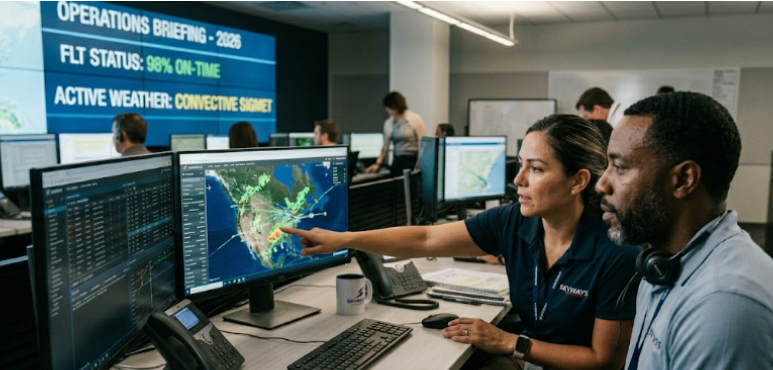
The aircraft dispatcher course teaches all of that. Students learn to build and analyze flight plans, read meteorological charts, assess aircraft performance data, understand FAA operational regulations, and practice practical scenario-based decision-making. By the end of the program, a student is not just exam-ready; they understand the actual work.
How to Become a Flight Dispatcher (Step-by-Step)
The journey from zero experience to a certified flight dispatcher follows a six-step sequence:
Step 1: Meet Basic Eligibility Requirements
The starting requirements are straightforward. A student must be at least 18 years old, hold a high school diploma or equivalent, and be able to communicate clearly in English. No aviation background is needed. Strong analytical thinking and the ability to stay calm under pressure help, but those develop through training.
Step 2: Enroll in an FAA-Approved Flight Dispatcher School
School selection is one of the most important decisions in this process. Only FAA-approved schools can produce graduates eligible for official certification. A dispatcher course from a non-approved provider has no licensing value in the U.S. aviation system; a student can complete every hour of it and still not qualify for the FAA exam. Picking the wrong school means starting over.
Step 3: Complete FAA-Required Training (200+ Hours)
FAA-approved programs require a minimum of 200 instructional hours. You cover things like aviation weather, navigation systems, aircraft performance, FAA rules, and how flight operations actually get planned day to day. Most strong programs go beyond the minimum hours because that extra practice really helps when exam time comes.
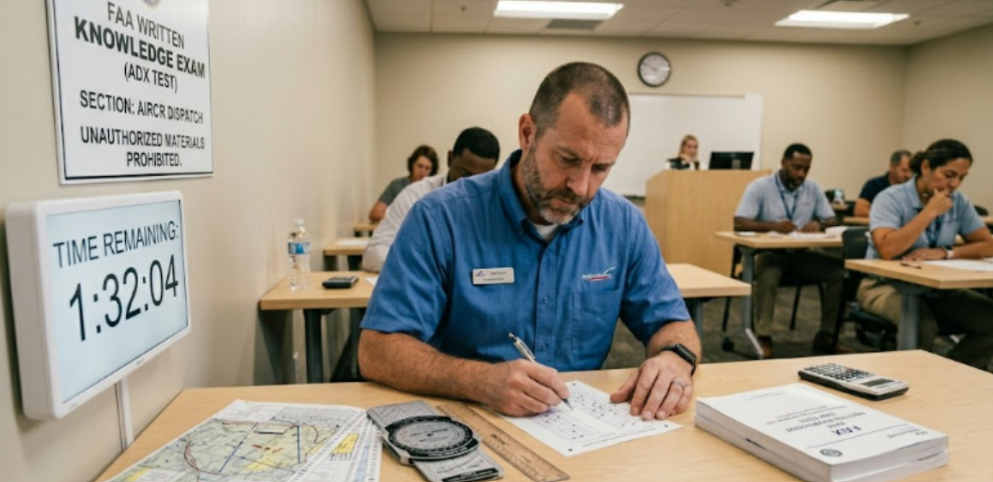
Step 4: Pass the FAA Written Knowledge Exam (ADX Test)
Once you finish training, you take the FAA Aircraft Dispatcher written exam, also called the ADX test. It pulls questions from everything you studied, so nothing really comes as a surprise if you’ve kept up during the course. Students who attend a solid FAA flight dispatcher program usually feel prepared for this step.
Step 5: Complete Oral and Practical Exams
After the written test, you move on to the oral and practical exams with an FAA-designated examiner. These aren’t about memorizing answers. You work through real-world flight scenarios and show how you’d make decisions under pressure. This stage really reflects how well you understood the training.
Step 6: Obtain FAA Aircraft Dispatcher Certification
After you pass all three parts, you receive your FAA Aircraft Dispatcher Certificate. This is the official license that allows you to work as a dispatcher for U.S. airlines. The process follows clear steps, and anyone who takes the training seriously can get through it.
Flight Dispatcher Course Requirements, Duration, and Training Costs in 2026
Flight Dispatcher Course Requirements in 2026
Before a student enrolls in an FAA flight dispatcher program, they need to confirm they meet the basic eligibility criteria. The requirements are not difficult, but they are non-negotiable:
- Minimum age of 18 years
- High school diploma or equivalent qualification
- Clear English communication skills, both written and spoken
- Ability to understand technical aviation concepts
Beyond these basics, students who tend to do well in dispatcher training are those who are comfortable making analytical decisions, stay calm under pressure, and can process multiple pieces of information at the same time. Those are not formal requirements, but they are qualities that the course and the career consistently reward.
Flight Dispatcher Course Duration: How Long Does Training Take?
One of the biggest draws of this career path is how quickly a student can go from enrollment to certification. Compared to commercial pilot training, which can stretch across years, the flight dispatcher duration is remarkably short.
Here is a realistic view at the timelines across different program formats:
- Full-time Programs: 6 to 8 weeks
- Standard Programs: 8 to 12 weeks
- Hybrid or Part-Time Options: Up to 14 weeks
The FAA requires a minimum of 200 instructional hours, and that compact schedule is intentional. The curriculum is designed to be intensive and focused, not drawn out. Students cover a significant amount of technical content in a short time, which is why full-time commitment during training makes a real difference.
For anyone doing a career change or coming from a non-aviation background, the short flight dispatcher duration is one of the most important factors. Most students are certified and ready to apply for airline positions within three months of starting.
Flight Dispatcher Course Fees in the USA
Cost is usually one of the first questions students ask, and it is worth addressing directly. The flight dispatcher training cost is significantly lower than almost any other aviation career pathway.
Here is a realistic breakdown based on what FAA-approved programs currently charge:
- Tuition: $4,000 to $6,500
- FAA exam and certification fees: $500 to $1,500
- Study materials and tools: $200 to $500
Total Estimated Investment: $5,000 to $8,000 for a complete FAA-approved program.
Many schools offer payment plans or installment options, so a student does not necessarily need to pay the full amount upfront. That flexibility makes the program accessible to a wider range of people, including those coming from non-aviation backgrounds with limited savings.
For comparison, becoming a commercial pilot in the USA typically costs between $80,000 and $120,000. Air traffic control involves a competitive government selection process with no guaranteed timeline. The flight dispatcher program fees place this credential in a completely different financial category, which is a large part of why it attracts so much interest from career changers every year.
How to Enroll in a Flight Dispatcher Course
The enrollment process is structured and easy to follow once the right school has been identified:
- Choose an FAA-approved flight dispatcher school that fits the budget and schedule
- Confirm eligibility: age, education, and English proficiency
- Submit the application and any required documentation
- Choose a payment option, upfront or financing plan if available
- Begin the FAA-approved training program
- Complete 200 or more hours of structured instruction
- Sit for the FAA written, oral, and practical exams
- Receive the Aircraft Dispatcher Certificate
Once enrolled in a proper program, the path is defined. There are no open-ended timelines or unclear expectations, just a clear sequence of steps that certified dispatchers across the U.S. airline industry have already completed.
FAA-Approved Flight Dispatcher Training Schools to Consider
FAA approval means the school’s curriculum meets 14 CFR Part 65 standards. Students learn what the regulation actually requires, including meteorology, navigation, aircraft systems, operations planning, and graduate, eligible to sit for the certification exams. Without that approval, the training produces nothing a U.S. airline will accept.
Before committing any tuition dollars, you should cross-reference your choices with the official FAA-Approved Part 65 Aircraft Dispatcher Courses List. Any legitimate program will appear on this federal registry immediately.
A proper FAA flight dispatcher program should clearly show:
- Student exam pass rates, which reflect actual instruction quality
- Instructor backgrounds and hands-on industry experience
- How much practical training is built into the curriculum
- Career support or job placement help after graduation
- Fee transparency, with no costs hidden behind vague program descriptions
Always verify FAA approval directly with the school before committing. Any legitimate program confirms this immediately.
Ready to Start Your Aviation Career?
If you want to get into aviation sooner and start building a practical career, a flight dispatcher career gives you a solid pathway. In 2026, many students choose it because the training takes less time, the flight dispatcher training cost feels more manageable, and the certification can lead directly into airline operations.
For students who want to enter aviation in a practical way, flight dispatcher certification still makes a lot of sense. You can train in months instead of years and move toward a career that puts you right in the center of airline operations.
Platforms like Airway Connect can also help students understand how the industry works, what training looks like, and what steps they need to take to prepare for airline operations roles with confidence.
Frequently Asked Questions
Can I take a flight dispatcher training course online?
Yes, but only part of it. Some schools offer online classes for the academic side of training. You still need to attend in person for practical instruction and FAA exams.
What salary does a certified flight dispatcher make?
Most new dispatchers start around $40,000 to $50,000 a year, depending on the airline and location. With experience, that number can climb to $90,000 to $120,000 or more, especially at larger airlines.
Are flight dispatcher jobs in demand in 2026?
Yes, and that is one reason many students look at this career. Airlines keep hiring as they grow, add routes, and replace experienced dispatchers who retire, which continues to create opportunities for new FAA-certified candidates.