Your aviation interview is just around the corner, but you’re still unsure what interview questions for entry-level aviation jobs to expect or how to answer them confidently.
To help you prepare, we’ve gathered the most frequently asked interview questions for entry-level aviation jobs in 2026. You’ll also find sample answers, practical tips, and recruiter insights that can help you stand out from other candidates and approach your interview with confidence.
General Interview Questions for Entry-Level Aviation Jobs
These are the questions that open every interview. Recruiters use them to gauge your communication, self-awareness, and genuine interest in aviation before they go any deeper. Mastering these foundational openers is the first step to acing interview questions for entry-level aviation jobs.
Here are the standard openers you should prepare for:
Tell Me About Yourself
Recruiters ask this to see how well you frame your own story. Keep it sharp. Mention your background, why aviation draws you in, and what you bring to this specific role. A strong answer runs 30 to 45 seconds and ends with a forward-looking statement.
Sample answer: I spent two years in customer-facing logistics and completed my ground operations training last year. Aviation has always been the industry I wanted to build a career in, and this role is the right place to start doing that seriously.
Why Do You Want to Work in Aviation?
Skip the generic passion speech. Recruiters hear “I’ve always loved planes” dozens of times a week. Connect your motivation to the industry’s structure, its standards, and its long-term career value.
Sample answer: Aviation operates at a level of precision and accountability that most industries never reach. I want to work in an environment where the standards are high, the work is meaningful, and the growth opportunities are real.
What Are Your Greatest Strengths?
Ground your answer in the three qualities aviation hiring managers consistently rank highest: safety awareness, communication, and teamwork. Back each one with a brief, real example rather than just listing traits.
Sample answer: My strongest qualities are careful attention to procedural detail and staying composed under pressure. In my last role, I maintained zero documentation errors over eight months in a compliance-heavy environment.
What Is Your Biggest Weakness?
Be honest and show growth. Recruiters see through cliché answers instantly. According to a hiring survey, 47% of interviewers say a lack of self-awareness is the single biggest reason they reject candidates.
Sample answer: Early on, I hesitated to ask for clarification when I was unsure about a procedure. I worked on that deliberately because in aviation, asking the right question early prevents errors later.
Safety and Compliance Interview Questions
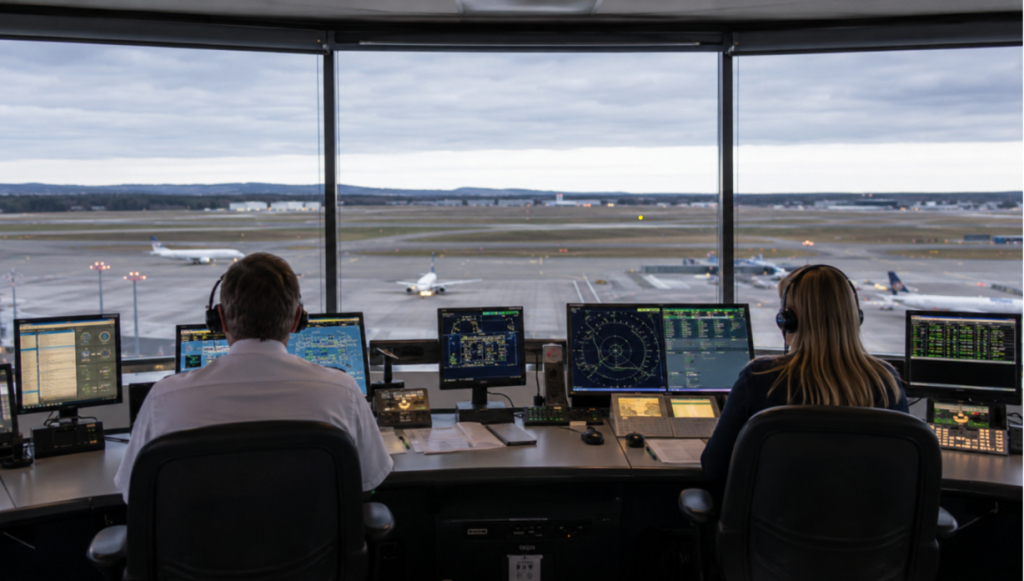
Safety is the single biggest hiring filter in aviation, full stop. Every recruiter at every level will test your instincts here. A 2023 IATA safety report confirmed that human factors, including communication failures and procedural non-compliance, account for the majority of aviation incidents. Recruiters know that, and they screen accordingly.
What Does Safety Mean to You in Aviation?
Sample answer: Safety means following every procedure exactly as written, speaking up the moment something looks wrong, and never treating a shortcut as acceptable, regardless of how small it seems. One skipped step in aviation can affect hundreds of people.
What Would You Do If You Noticed a Safety Violation?
Sample answer: I would report it immediately to my supervisor, document exactly what I observed, and make sure the area or equipment remains secured until the appropriate authority reviews and clears it. There is no gray area on this.
Describe a Time You Prevented a Mistake
Use the STAR framework here: Situation, Task, Action, Result. Recruiters want specifics, not generalities.
Sample answer: During a shift handover at my previous job, I caught a mislabeled shipment heading to the wrong dispatch bay. I flagged it before it left the floor, corrected the routing, and filed a near-miss report so the error pattern could be addressed at the process level.
Customer Service Aviation Interview Questions
When preparing for interview questions for entry-level aviation jobs, customer service competency is just as critical as safety awareness. For airline agents, airport staff, and passenger service teams, every single interaction involves a frontline employee making a high-stakes judgment call in real time.
Recruiters want to see that you can handle chaotic terminal dynamics and stressed travelers calmly, without ever compromising operational protocols.
How Would You Handle an Angry Passenger?
Sample answer: Stay calm, let them finish, acknowledge their frustration directly, then move to solutions. Passengers escalate when they feel ignored. The moment they feel heard, the situation almost always de-escalates.
Tell Me About a Time You Resolved a Customer Complaint
Sample answer: A customer at my previous job received wrong information about their order timeline. I called them personally, took full ownership of the error, and expedited their resolution. They left a written review specifically mentioning the follow-through.
Teamwork and Communication Questions
Aviation runs on what pilots call Crew Resource Management, and that mindset extends to every role on the ground. Recruiters assess CRM-style thinking even in non-pilot candidates because poor team communication is directly linked to operational failures across every department.
Tell Me About a Time You Worked as Part of a Team
Sample answer: During a peak period, our team handled double the usual daily volume with one person short. I took on additional coordination responsibilities, maintained clear communication throughout the shift, and we finished ahead of schedule with zero errors.
How Do You Communicate During High-Pressure Situations?
Sample answer: Brief, direct, and confirmed. Under pressure, I state what I am doing, wait for acknowledgment, and avoid assumptions. Unconfirmed communication in fast-moving environments is where most errors begin.
Situational Aviation Interview Questions
Situational questions are showing up more frequently across 2026 hiring rounds because recruiters want to see how you reason through problems you have never faced before. The answer matters less than the thinking process behind it.
What Would You Do If You Were Unsure About a Procedure?
Sample answer: Stop before proceeding and ask or consult the documentation immediately. Acting on uncertainty in aviation is far more dangerous than pausing to confirm. Any solid team respects that instinct.
How Would You Prioritize Multiple Tasks During a Busy Shift?
Sample answer: Identify what is time-critical and safety-relevant first, communicate my workload to my supervisor if anything is at risk of slipping, then work through priorities methodically. Multitasking without a clear hierarchy is how errors get introduced.
Questions You Should Ask the Interviewer
An interview is a two-way street, and asking thoughtful questions shows you are serious about a career in the skies. It proves you are proactive, safety-minded, and ready to learn. When preparing your interview questions for entry-level aviation jobs, make sure to include a few targeted questions for the hiring manager to stand out from the crowd.
Before your interview ends, consider asking:
- What does success look like in the first 90 days? This shows you are already thinking about contribution, not just getting hired.
- What training opportunities are available for this role? This signals that you take professional development seriously and plan to grow within the organization.
- What qualities distinguish top performers in this team? This gives you direct insight into what excellence looks like here and signals to the interviewer that you are aiming for it.
- What career advancement paths exist from this position? This confirms your intention to build a long-term career with this employer, not just fill a temporary gap.
Common Aviation Interview Mistakes to Avoid
Most entry-level aviation interviews are lost not because candidates lack experience. But they made avoidable mistakes that signaled poor preparation or limited self-awareness. Industry recruiters consistently flag the same patterns across hiring cycles.
- Giving generic answers is the most common and most costly mistake. “I’m a hard worker who loves aviation” tells a recruiter nothing. Every answer needs a specific example, a clear outcome, and a direct connection to the role.
- Not researching the employer is a close second. Recruiters ask company-specific questions specifically to filter out candidates who applied broadly without genuine interest. Know the airline’s routes, the airport’s recent expansions, or the MRO’s service specializations before you walk in.
- Failing to provide examples turns strong qualities into empty claims. Say you are great under pressure, then prove it with a real situation, a real action, and a real result.
- Speaking negatively about previous employers is one of the fastest ways to end your chances. Aviation is a relationship-based industry, and professionalism is evaluated from the first word you say about your work history.
- Overusing cliché weaknesses, perfectionism, working too hard, and caring too much signal that a candidate is not genuinely self-reflective. Recruiters have heard these so many times that they now actively penalize them.
- Ignoring safety considerations in behavioral answers is a significant misstep, particularly for operations and ground roles. Weave safety awareness into your examples naturally, because in aviation, it genuinely belongs in almost every answer.
Industry professionals across hiring forums consistently note that self-awareness and professionalism carry as much weight as technical knowledge at the entry level. A candidate who demonstrates both will outperform a more experienced candidate who demonstrates neither.
Final Thoughts
Aviation employers hire attitude as much as experience. Entry-level candidates are not expected to know everything upon walking in. Professionalism, safety awareness, clear communication, and a genuine willingness to grow will carry you further than any credential alone. Preparing for common interview questions for entry-level aviation jobs is a great way to showcase these traits before you even step into the hangar or terminal.
Build your application, target the right roles, and search the full Airlines Directory at Airway Connect, where the Aviation Job Search tool and Resume Builder give you everything you need to go from prepared to hired.