You Googled “flight dispatcher salary.” You got a number somewhere between $54,000 and $75,000. And now you’re wondering whether that is real? Is that year one? Is that after ten years?
Here is the truth. That number is real, but it does not tell the full story. It blends entry-level dispatchers at regional airlines with experienced professionals working at major carriers like Southwest or United. Both are airline dispatchers, but their pay looks completely different in practical life.
If you want to understand what you will actually earn, how salaries grow with experience, and what most institutes don’t tell you, read this blog.
How Much Does a Flight Dispatcher Make in the USA?
The national average airline dispatcher salary sits between $54,000 and $75,000 per year in 2026.
But that number means more when you split it by career stage:
- Entry-level (regional airlines): $40,000 – $50,000
- Mid-career (5–7 years): $65,000 – $85,000
- Senior (10+ years at major airline): $100,000 – $150,000+
- Top scale at Southwest Airlines: $155,000 – $203,000+
The jump from entry to senior is real. It doesn’t happen overnight. But it happens, predictably, and with union contracts backing every step.
FAA Aircraft Dispatcher Certification
A certified flight dispatcher earns more than an uncertified “flight follower” at a charter operator. The FAA Aircraft Dispatcher Certificate is the legal requirement for working at major U.S. airlines such as American, Delta, United, Southwest, and Alaska.
This certification is not optional, and is regulated by the U.S. Federal Aviation Administration (FAA), which defines Airline dispatchers as licensed aviation professionals responsible for joint operational control of flights alongside the pilot-in-command.
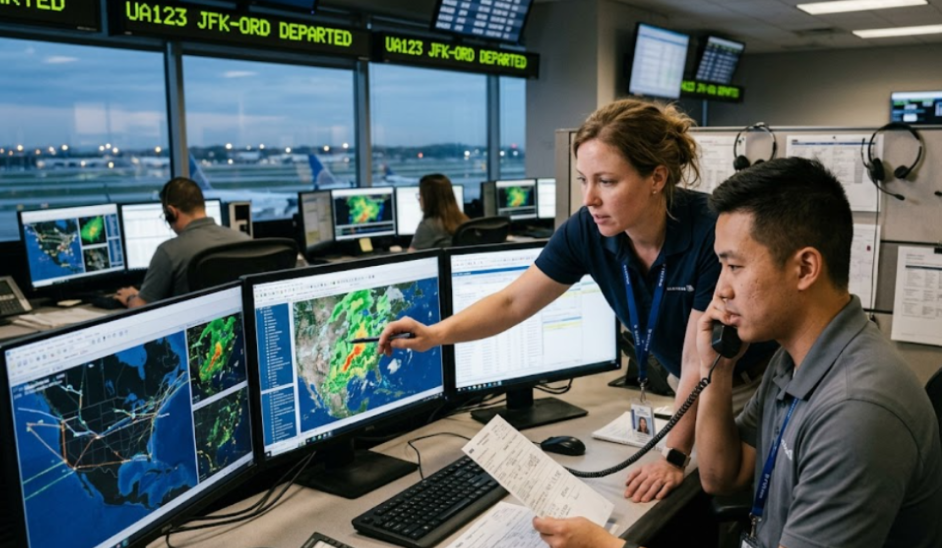
The FAA Aircraft Dispatcher Certificate takes 5 to 12 weeks, with the total cost ranging from $6,000 to $8,500, including FAA exam fees. Most graduates earn that entire investment back within their first 60 to 90 days of work.
Salary Impact: Certified dispatchers earn significantly more than uncertified flight operations staff. Most recover training costs within 1-3 months of employment.
Entry-Level Dispatcher Salary:
Most new dispatchers start at regional airlines. Think SkyWest, Republic Airways, Endeavour Air, and PSA Airlines.
Starting salary: $40,000 to $50,000.
But here’s what most salary articles skip entirely.
Night shift differentials add $2 to $5 per hour on top of your base rate. Weekend premiums add another $1 to $3. Overtime pays at time-and-a-half, and entry-level dispatchers who pick up extra shifts regularly add $5,000 to $10,000 to their annual take-home without a single promotion.
A $42,000 base salary on regular night shifts can realistically become $48,000 to $52,000 in total cash during year one.
Tip for New Students: Don’t chase the highest-paying school. Chase the best job placement rate. Your first airline employer shapes your entire salary trajectory far more than your training program does.
How Much You Can Earn After 5 to 10 Years
This is where dispatching gets genuinely exciting.
At the five-year mark, mid-career dispatchers earn:
- Low-cost carriers: $60,000 – $80,000
- Cargo carriers (FedEx/UPS): $65,000 – $85,000
- Major airline entry: $75,000 – $100,000
The magic move is from a regional carrier to a major airline. Most majors want two to five years of regional experience before hiring. Once you cross that bridge, the seniority pay ladder kicks in, and it’s automatic.
Seniority pay scale at a major airline:
| Year at Major Airline | Approximate Annual Base |
|---|---|
| Year 1 | $58,000 – $66,000 |
| Year 5 | $74,000 – $87,000 |
| Year 10 | $99,000 – $114,000 |
Every year, it steps up automatically. No negotiating, no politics, just union contracts, lock it in.
Bonus Point: Senior dispatchers who volunteer for international operations desks or lead dispatcher roles earn an extra $5,000 to $15,000 on top of their seniority rate. Those speciality premiums compound fast over a career.
Regional Airlines vs. Major Airlines
| Factor | Regional Airlines | Major Airlines |
|---|---|---|
| Starting Salary | A new dispatcher usually earns around $45,000 to $60,000 per year, and the pay grows slowly at the beginning. | A new dispatcher can start closer to $60,000 to $80,000 per year, depending on the airline and location. |
| Experienced Salary | Even after a few years, many dispatchers stay around $65,000 to $85,000, with gradual increases. | With experience, dispatchers often reach $100,000 to $140,000+ per year, especially with senior roles. |
| Salary Growth Speed | Salary growth feels slower because regional airlines have tighter budgets and smaller operations. | Salary growth moves faster because major airlines have stronger revenue and structured pay scales. |
| Benefits | Benefits are basic but still include travel perks, healthcare, and standard airline employee discounts. | Benefits are stronger, including better travel privileges, retirement plans, bonuses, and union protection. |
| Job Stability | Job stability is decent, but smaller airlines can be more sensitive to economic changes. | Job stability is stronger because large airlines have established global operations. |
| Career Growth | You need to move to a major airline to see faster salary growth. | Job stability is stronger because large airlines have established global operations. |
The strategic move is to start regional, build your resume for two to five years, then apply to a major.
Insight: Some dispatchers make the mistake of staying comfortable at a regional carrier too long. Every year you delay that move to a major airline, you delay years of compounding seniority at a much higher pay scale.
Hidden Factors That Increase Flight Dispatcher Salary
Here are a few hidden factors that can increase your salary:
1. Union Contracts Increase Lifetime Pay
Union membership adds 15 to 30% to your lifetime earnings compared to non-union equivalent positions. American, United, and Southwest dispatchers sit under strong collective bargaining agreements.
2. Overtime Can Add $10K–$25K Per Year
Overtime compounds. A senior dispatcher aggressively picking up shifts can add $15,000 to $25,000 on top of their base. Some push total compensation well past $150,000 with no promotion required.
3. Location Affects Real Income
Location matters, but not always the way you think. A $75,000 salary in San Francisco leaves less take-home after rent than $62,000 in Dallas or Phoenix. Major airline hubs in Texas, Georgia, and Colorado offer competitive pay with far lower costs of living.
4. Travel Benefits
Travel benefits have real dollar value. Free standby flights for you and your family. Hotel discounts of 50 to 60 percent. Rental car deals. For a family that travels, this adds thousands in real value every year, and it starts at your very first airline job.
The Reality Most Institutes Don’t Tell You
These are the realities of being a flight dispatcher:
Reality # 1
Most of the aircraft dispatcher’s first job involves overnight shifts, weekend coverage, and holiday work. Junior dispatchers get the shifts senior staff bid away from. That’s how seniority works in aviation, everywhere.
ALT Text: Flight dispatcher working a late-night shift.
Reality # 2
The work is also genuinely high-pressure. You co-sign every flight plan. You share legal responsibility with the captain for that flight’s safety. During weather events or irregular operations, the pace gets intense.
Reality # 3
Burnout is also real. Rotating schedules disrupts sleep patterns. Holidays mean working. Some dispatchers leave the industry within three to five years because of schedule fatigue, not the salary.
Reality # 4
Dispatching rewards people who find controlled chaos energising. If that’s you, the financial outcome over a career is excellent.
Still, this career fits the right people perfectly. Dispatching rewards those who stay calm under pressure, enjoy structured chaos, and think clearly when things get unpredictable.
Tip: Before enrolling in any program, spend time researching what actual dispatchers say about the day-to-day work. The Reddit aviation community and dispatcher forums are goldmines of honest career insight. Know what you’re walking into; the salary is worth it when the job fits your personality.
How to Become a Certified Flight Dispatcher
The following are the requirements to become a flight dispatcher:
- Minimum age: 23 years old
- Education: High school diploma or equivalent (no college degree required)
- Training: Complete an FAA-approved dispatcher program (5 to 12 weeks)
- Exams: Pass the FAA written exam and the practical oral exam
- First job: Most graduates land a position within 1 to 3 months of certification
Total timeline: roughly 4 to 5 months.
Ready to Start Your Aircraft Dispatcher Career?
Knowing the salary numbers is one thing. Actually getting hired, and hired at the right airline, requires more than just your FAA certificate.
That’s exactly where Airway Connect makes a real difference. It’s a purpose-built platform for aspiring and active flight dispatchers. They offer a resume builder designed specifically for dispatcher roles, interview prep with real dispatcher Q&As and scenario-based materials, a verified airline directory of Part 121 and 135 carriers filtered by state and certification, live job listings with direct application links, and a community forum where you can connect with working dispatchers and mentors.
Most students get their FAA certificate and then feel lost about what to do next. Airway Connect bridges that gap, completely free to get started.
Airway Connect’s airline directory helps you research specific carrier cultures, hub locations, and dispatcher hiring trends before you apply. That kind of targeted research is exactly what separates candidates who land major airline jobs from those who keep bouncing between regionals.
Final Thoughts
The flight dispatcher salary story is genuinely good, once you understand the full reality.
Year one looks like $40,000 to $50,000. That’s honest. But the path to $100,000 at a major airline is real and achievable within five to ten years. The training costs almost nothing compared to any other professional aviation career. And federal law keeps the demand for your skills permanently in place. Start regional. Build your experience. Move to a major carrier. Pick up overtime strategically. Stay for seniority.
And if you want help building a resume, prepping for interviews, and finding exactly which airlines are hiring right now, Airway Connect has everything in one place, free to join. It’s the smartest first step you can take after getting your FAA certificate.
FAQ
How much do flight dispatchers make?
Entry-level: $40,000 to $50,000. Mid-career: $65,000 to $85,000. Senior at major airline: $100,000 to $203,000+, depending on carrier.
Is a flight dispatcher a good career?
Yes. Stable demand backed by FAA law, low training cost, fast entry, clear salary growth, and strong union protection at major airlines.
Can you become a dispatcher without a degree?
Yes. Only an FAA certificate and a minimum age of 23 are required. No college degree needed.
What airline pays dispatchers the most?
Southwest Airlines. Their union contract tops out at $155,000 to $203,000+ for senior dispatchers.
Do dispatchers get flight benefits?
Yes. Free or discounted standby travel, extended to family, plus hotel and rental car discounts at most major carriers.