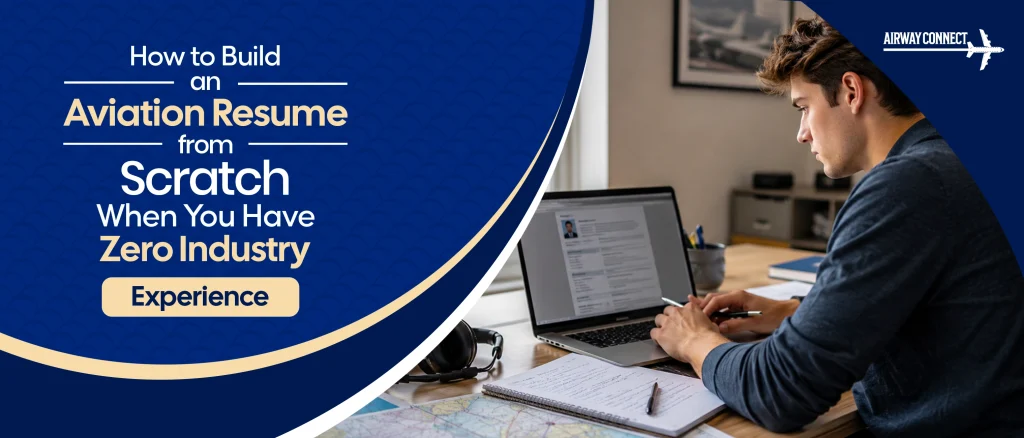
No aviation job history does not mean you have nothing to offer. It means you can still build an aviation resume using the strongest evidence that currently sits outside the industry.
A targeted aviation resume converts that evidence into language an airline, airport, or operations recruiter can evaluate. It shows readiness through training, judgment, reliability, and relevant results.
The goal is not to hide missing experience. The goal is to prove that your background can support safe, disciplined aviation work.
What an Aviation Resume Must Prove
Entry-level employers know first-time applicants may lack airline experience. They still expect proof of useful workplace behavior and role preparation.
The 2026 NACE employer survey identifies teamwork, problem-solving, and communication among the leading skills sought on entry-level resumes.
Aviation hiring also values safety awareness, procedural discipline, and dependable performance. NACE findings support an evidence-based approach instead of a generic skills list.
Your document should answer four questions quickly:
- Which aviation role are you targeting?
- What training or credentials support that role?
- Which past results prove transferable ability?
- What evidence shows you understand the operating environment?
Steps to Build an Aviation Resume from Scratch
Below are major steps one must follow to land a job, even with zero experience:
Step 1: Choose One Target Role
Do not write for “the aviation industry.” Write for one opening and one hiring team.
A dispatcher application should emphasize operational judgment, weather analysis, prioritization, and regulatory learning. Ground operations may prioritize safety, turnaround coordination, loading accuracy, and irregular operations.
Passenger service requires another version. It places greater weight on de-escalation, rebooking, policy explanations, and clear communication during disruptions.
Review three current postings for the same role. Mark repeated duties, qualifications, systems, and behavioral expectations.
Use the airlines directory to separate Part 121 carriers, Part 135 operators, and other potential employers. Then compare their language through current aviation job listings.
Step 2: Build an Evidence Inventory Before Writing
Most weak resumes begin with formatting. If you want to build an aviation resume that holds up, start with evidence and remove anything that does not support the target role.
Create a private inventory covering jobs, coursework, volunteering, projects, certifications, and measurable results.
Include examples involving safety, deadlines, customers, equipment, procedures, or changing priorities.
Your aviation resume should use only the evidence matching the position. This inventory prevents useful experience from disappearing behind an unrelated job title.
Use this evidence map:
| Employer Need | Possible Non-Aviation Evidence | Resume Proof |
|---|---|---|
| Safety discipline | Warehouse, healthcare, security, construction | Followed inspections, reporting rules, or controlled procedures |
| Operational coordination | Logistics, restaurants, retail, call centers | Managed handoffs, queues, schedules, or urgent changes |
| Accuracy | Banking, inventory, data entry, quality control | Reconciled records, reduced errors, or verified transactions |
| Customer communication | Hospitality, sales, support | Resolved complaints, explained policies, or handled disruptions |
| Decision-making | Supervisory work, emergency response, technical support | Prioritized competing issues under time pressure |
TURN EXISTING EXPERIENCE INTO EVIDENCE
Build a role-specific draft around your real work, training, and transferable results.
Step 3: Translate Past Work Without Exaggerating
Unrelated experience becomes relevant when each bullet explains behavior, operating conditions, and results. Translation is useful; invention is disqualifying.
“Worked at a busy restaurant” says little. “Coordinated 40 daily orders during peak periods while maintaining allergy and payment accuracy” shows workload control.
A retail supervisor may demonstrate compliance, conflict resolution, and shift handoffs. A software support specialist may show incident triage, documentation, and calm communication.
Use this translation formula:
Action + responsibility + operating condition + measurable result
Examples:
- Retail: Reconciled daily cash records and resolved discrepancies before shift close.
- Warehouse: Completed safety checks before equipment use and reported defects through established procedures.
- Customer support: Prioritized urgent cases, documented actions, and maintained response targets during demand spikes.
- Military: Coordinated personnel, equipment, and time-sensitive briefings under controlled procedures.
- Healthcare: Protected confidential records while communicating accurate updates across several departments.
These bullets do not pretend the work happened inside an airline. They prove behaviors that aviation employers can use.
Step 4: Create Relevant Proof Before You Are Hired
You can still build an aviation resume with a strong aviation section even with zero industry employment. It requires honest and verifiable activity linked to the target role.
Useful entries may include:
- FAA-approved dispatcher coursework
- Manual flight-planning exercises
- Weather briefing practice
- Airport or airline job-shadowing
- Safety workshops and relevant certifications
- Aviation association events
- Volunteer roles at aviation organizations
- Research projects using operational sources
List these under “Aviation Training and Projects,” not “Professional Experience.” Describe the assignment, tools, decisions, and completed output.
A dispatcher candidate could document a release project covering weather, NOTAMs, fuel, alternates, and aircraft performance. The flight dispatcher certification pathway shows where those projects support the wider hiring plan.
The resource libraries can also help locate training, events, internships, and structured learning opportunities. Each completed activity gives your application another verifiable proof point.
Step 5: Use the Right Structure to Build an Aviation Resume
For most beginners, a one-page combination format works well. It presents qualifications first while preserving a clear employment timeline.
CareerOneStop recommends combination resumes for career changes and transferable skills. It also advises a simple, single-column layout for accurate ATS reading.
This forum guidance allows one or two pages, depending on relevant experience. Use this order:
- Name, city, state, phone, email, and LinkedIn
- Targeted professional summary
- Certificates, licenses, and relevant training
- Aviation projects or technical coursework
- Transferable skills
- Employment history
- Education
Place earned aviation credentials near the top. Before completion, use accurate wording and include the expected completion date.
Essential note: Having an in-depth grasp of what recruiters seek in entry-level aviation applications can help you prioritize each section of your resume.

Step 6: Write Bullets That Prove Performance
Each bullet should contain an action, task, operating condition, and result. Use numbers when they clarify scale, speed, accuracy, volume, or improvement.
Weak bullet
- Responsible for customer service and problem-solving.
Stronger bullet
- Resolved 30 daily customer cases while documenting escalations and maintaining required response times.
Aviation-focused translation
- Prioritized time-sensitive disruptions, documented escalations, and communicated clear updates during high-volume operations.
Never add a metric you cannot defend. Estimates should remain reasonable and explainable during an interview.
Clear writing has measurable value. A field experiment involving nearly half a million jobseekers found writing assistance increased hiring by 8 percent.
The published study also reported 10 percent higher wages among treated applicants. The Management Science study linked the improvement with fewer errors and easier reading.
MATCH THE RESUME TO ACTIVE ROLES
Compare your evidence with current openings before submitting each application.
Step 7: Match Keywords Without Copying the Posting
Applicant tracking systems compare application information with role requirements. Human reviewers still need readable proof behind every important term.
Build a keyword list from three similar postings. Confirm unfamiliar occupational language through O*NET OnLine, a Department of Labor-developed occupational database.
Use exact terms only when they truthfully describe your background. Place them inside summaries, project bullets, credentials, and work achievements.
Dispatcher terms may include:
- Operational control
- Flight planning
- Weather analysis
- NOTAM review
- Fuel and alternate planning
- Regulatory compliance
- Irregular operations
- Crew communication
Your aviation resume should not repeat a vacancy word for word. It should show where each term connects to training, work, or projects.
Step 8: Keep the File ATS-Safe
Use standard headings, conventional fonts, and consistent dates. Avoid graphics, rating bars, headshots, columns, icons, and content inside headers.
Save the file type requested by the employer. Keep a plain Word version and a clean PDF version available.
Use a professional filename:
FirstName_LastName_TargetRole_Resume.pdf
Check every link, date, credential, and phone number. Read the final copy aloud before submission.
Step 9: Add a Short, Targeted Summary
Do not use an objective about wanting growth. State the role, strongest evidence, and operational value.
Example:
Entry-level aircraft dispatcher candidate with Part 65 training and practical flight-planning work. Brings logistics coordination, precise documentation, and time-critical decision support.
Change the summary for each target role. Keep it within three lines and remove unsupported adjectives.
A Practical One-Page Blueprint
Use this blueprint when you build an aviation resume for the first time:
Professional Summary
Write two or three lines connecting your background with the target role.
Credentials and Training
List certificates, licenses, relevant coursework, and completion dates.
Aviation Projects
Include two or three projects with tools, decisions, outputs, and results.
Transferable Experience
Use four to six strong bullets across the most relevant jobs.
Skills
Group technical, operational, software, language, and communication skills.
Education
Include the credential, institution, location, and completion date.
Common Mistakes That Weaken Entry-Level Applications
- Using one document everywhere: Dispatcher, ramp, airport operations, and passenger roles require different evidence.
- Listing duties without results: Hiring teams need proof of performance, not copied job descriptions.
- Hiding employment dates: Missing timelines create questions and weaken experience scoring.
- Claiming unearned credentials: Never list a certificate as completed before issuance.
- Overusing aviation jargon: Technical language must connect to genuine knowledge or practice.
- Writing dense paragraphs: Resumes need short bullets and visible section headings.
- Forcing two pages: One strong page usually suits applicants with limited experience.
- Adding references: Provide them later when an employer requests them.
PREPARE FOR THE INTERVIEW STAGE
Turn every resume claim into a clear example for technical and behavioral screening.
The interview preparation tools connect written evidence with concise spoken answers. That continuity helps candidates defend every claim during screening.
Your First Aviation Role Starts with Evidence
When you build an aviation resume for the first time, it should not apologize for missing industry tenure. It should present a disciplined and verifiable case for readiness.
Choose one role, translate prior results, add honest aviation projects, and match the employer’s language carefully. Verify every claim before submitting.
Airway Connect brings resume building, current vacancies, airline research, learning resources, and interview practice into one structured career workflow. That reduces scattered preparation and keeps each application tied to a real hiring target.
The result is a concise document showing how you think, work, and communicate. That can earn serious consideration without invented experience.
Frequently Asked Questions
Can I get an aviation job with no experience?
Yes. Entry-level roles may accept transferable experience, training, and demonstrated readiness. Requirements still vary by employer and position.
What should I put on an aviation resume with no experience?
Include relevant training, projects, certifications, transferable achievements, education, and role-specific skills. Keep every claim accurate and verifiable.
Should I include non-aviation jobs?
Yes. Keep roles that demonstrate safety, accuracy, coordination, customer care, reliability, or decision-making. Rewrite each bullet around relevant outcomes.
Should my resume be one page?
One page usually works for a first industry application. Add another page only when relevant experience or technical qualifications justify it.
Do I need a professional summary?
Yes. A targeted summary explains the career transition and directs attention toward your strongest evidence.
Should I use the same keywords as the job posting?
Use relevant terms accurately, but never copy complete statements. Every keyword should connect to training, employment, or a documented project.