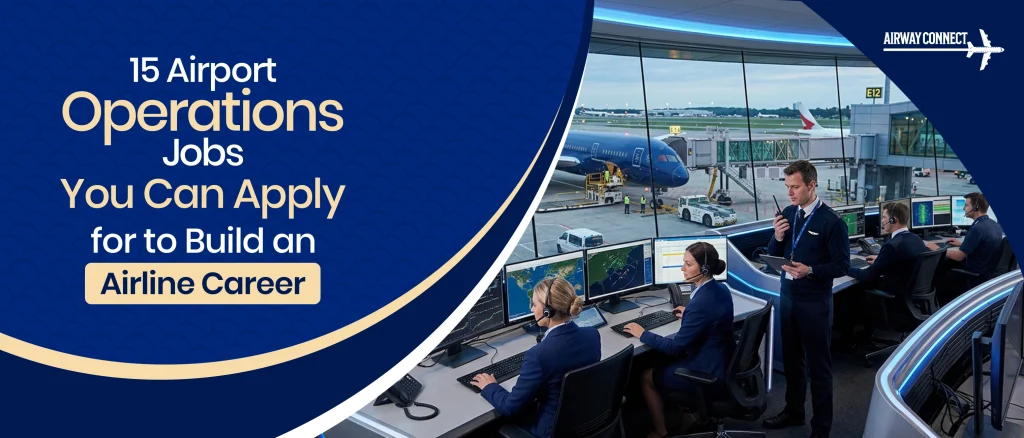
At a U.S. airport, one departure can involve gate agents, ramp crews, cargo staff, load planners, station coordinators, and operations-control teams. Airport operations jobs place candidates directly inside that chain.
The U.S. air-transportation subsector employed roughly 566,000 people in August 2026, according to current U.S. air transportation workforce data. The workforce spans frontline employees, technical specialists, operations-center teams, and managers.
For applicants, the useful question is which role develops experience that fits the career they want next. Some airport operations jobs accept first-time aviation candidates, while specialist positions can require certification or prior airline exposure.
What Counts as an Airport Operations Job?
The term covers work performed by airlines, airport authorities, ground handlers, cargo operators, contractors, and centralized operations centers. Daily duties may happen at a gate, ramp, warehouse, airfield, station office, or OCC.
Current Delta airport customer service and cargo careers identify Ticket/Gate Agent, Ramp Agent, Cargo Agent, and Cabin Experience Agent among entry-level operational roles. Individual qualifications still depend on the employer and assignment.
Retail, hospitality, warehousing, logistics, emergency services, and office operations can already provide useful evidence. A well-targeted aviation resume with zero industry experience should translate those skills accurately without inventing airline duties.
Turn existing work history into evidence an airline recruiter can evaluate. Focus your resume on reliability, procedural discipline, communication, safety awareness, and decisions made under pressure.
15 Airport Operations Jobs Worth Considering
The strongest choice depends on your qualifications and intended direction. These airport operations jobs range from accessible frontline positions to specialized roles much closer to an airline’s operational-control environment.
1. Airport Operations Agent or Crewmember
An airport operations agent supports day-of-operation station activity, which can include passenger processing, gate duties, disruption handling, and coordination between teams. The exact scope changes from one carrier to another.
The role suits applicants who communicate clearly and can reset priorities without losing procedural accuracy. It can develop broad station knowledge before movement into supervision or other airline operations jobs.
2. Ramp Agent
Ramp agents load and unload baggage or cargo, operate approved ground equipment, and support aircraft turnaround schedules. Physical work, outdoor conditions, safety discipline, and availability for irregular shifts are normal requirements.
Ramp experience gives employees direct exposure to aircraft turns, loading pressures, equipment movement, and delay recovery. For beginners, ramp agent jobs can provide a practical entry into ground operations jobs.
3. Gate Agent
Gate agents manage boarding, itinerary problems, announcements, passenger documentation, and departure coordination. Disruptions demand accurate communication because customer, baggage, seating, and operational problems can develop during the same departure window.
The experience can support progression into station leadership and airline customer service roles. Employees also see how operational changes reach passengers when a flight is delayed, swapped, cancelled, or rebooked.
4. Ticketing or Customer Service Agent
Ticket and customer service agents handle check-in, baggage acceptance, rebooking, special-service requests, and airline policy explanations. Strong computer use becomes especially important when weather or maintenance disruption creates long queues.
Many airlines provide system-specific training after hiring. Candidates comparing terminal work with cabin crew may also want to understand flight attendant compensation and reserve structures before choosing a passenger-facing career path.
5. Baggage Service Agent
Baggage service agents trace delayed bags, document claims, coordinate recovery, and explain delivery procedures to passengers. The work combines customer handling with detailed records and communication between multiple stations.
A missing bag may involve several flights and handling teams. Experience here can support later movement into baggage control, station operations, customer recovery, or ground-service supervision.
Candidates ready to move closer to operational control can compare current flight operations jobs against the station knowledge, systems experience, and shift responsibilities they have already developed.
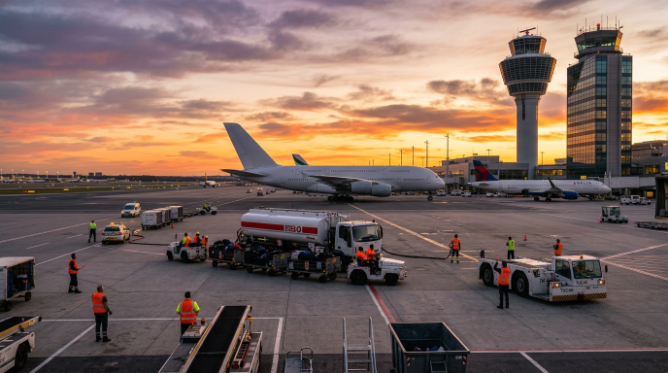
Cargo, Aircraft Turnaround and Load-Control Roles
These airport operations jobs sit closer to aircraft movement, loading, weight distribution, and turnaround performance. They suit people who prefer process control, logistics, and airside activity over continuous passenger interaction.
6. Cargo Agent
Cargo agents accept, document, track, and coordinate freight moving through airline networks. Depending on the assignment, duties may involve airway bills, warehouse activity, dangerous-goods procedures, customer communication, and flight cut-off times.
The job builds relevant logistics experience for cargo airlines and ground handlers. Employees also learn the timing discipline behind transfers, departure cut-offs, freight recovery, and irregular operations.
7. Cabin Experience or Aircraft Appearance Agent
Cabin appearance teams clean, inspect, and reset aircraft interiors under controlled procedures and strict turnaround windows. Their completion time affects boarding readiness, aircraft presentation, and the station’s ability to protect departure performance.
This can be an accessible airline entry point at major airports. Employees become familiar with secure-area access, aircraft servicing, operational handoffs, and the pace of repeated aircraft turns.
8. Aircraft Fueler or Line Service Technician
Aircraft fuelers and line-service employees perform fueling and aircraft servicing under detailed safety procedures. Employers may require a driver’s license, physical capability, security clearance, equipment training, and availability across nights and weekends.
The job develops disciplined airside habits and practical aircraft familiarity. It can lead toward lead positions, FBO operations, ground-service supervision, or other technical airport operations careers.
9. Load Planner
Load planners determine how passengers, baggage, containers, cargo, and fuel affect aircraft weight and balance. They produce or coordinate loading information so each departure remains inside applicable weight and center-of-gravity limits.
The work rewards numerical accuracy and quick information retrieval. It can develop relevant experience for candidates interested in cargo control, centralized load planning, flight support, or aircraft dispatch.
10. Ramp or Cargo Supervisor
Ramp and cargo supervisors coordinate personnel, equipment, loading priorities, safety procedures, and departure deadlines. They also manage staffing gaps, operational incidents, handoffs, and recovery activity during irregular operations.
This is commonly a progression role for experienced frontline employees. Supervisory work adds accountability for people, compliance, punctuality, and operational decisions without removing the employee from day-to-day airport activity.
Technical airline careers become easier to plan when training and job requirements sit in one place. Identify the credential or operational exposure your next role actually requires.
Operations-Center and Flight-Support Careers
The next airport operations jobs involve schedules, aircraft movement, crew legality, operational coordination, or airfield compliance. These positions generally demand stronger technical judgment and may carry more specific entry requirements.
11. Station Operations Coordinator
Station operations coordinators track the local flight schedule and move information between gates, ramp teams, maintenance, flight crews, and centralized system operations. During disruption, they help keep decisions synchronized across the station.
Controlled company procedures become more important at this level. Knowing how a flight operations manual supports day-of-operation decisions helps explain why source recognition and procedural accuracy matter when several problems occur together.
12. Crew Scheduler
Crew schedulers maintain complete and legal pilot or flight-attendant coverage as schedules change. They work through staffing, absences, reassignments, duty limitations, contractual requirements, weather disruption, and other day-of-operation problems.
13. Aircraft Dispatcher
A Part 121 aircraft dispatcher plans and monitors assigned flights, reviewing weather, routing, fuel, aircraft performance, and operational restrictions. Under applicable operations, dispatchers also carry defined operational-control responsibilities alongside the pilot in command.
Dispatch is a certificated U.S. aviation role. FAA guidance states that applicants must be at least 23 to receive the Aircraft Dispatcher Certificate, with specific testing provisions available from age 21.
Once qualified, targeted airline dispatcher jobs can put candidates directly inside an airline OCC. Technical interviews commonly focus on regulations, weather, planning, MEL awareness, communication, and operational judgment.
14. Flight Follower or Operations Control Coordinator
Part 135 and charter operators may employ flight followers or operations coordinators to monitor aircraft, support crews, communicate changes, and maintain operational records. Exact responsibilities depend on the carrier’s certificate and procedures.
The role can provide useful dispatch-style exposure. Applicants should examine each posting carefully because Part 135 flight following and Part 121 certificated aircraft dispatch carry different regulatory responsibility structures.
15. Airport Operations Specialist
Airport operations specialists are frequently employed by an airport authority. Their work may include airfield inspections, wildlife or foreign-object-debris response, construction coordination, security functions, and support for Part 139 compliance.
This route develops knowledge of runways, taxiways, airport certification, emergency response, and airfield conditions. That experience can support progression toward airport management, airfield leadership, or airline station operations.
Which Roles Build the Best Path Toward Dispatch?
Crew scheduling, station operations, load planning, ramp leadership, and flight following expose employees to problems that intersect with an OCC. That experience can strengthen a future dispatcher application once certification requirements are satisfied.
Internal airline experience can also build familiarity with company systems, disruption handling, shift work, and operating culture. The strongest progression path depends on the carrier, hiring cycle, candidate qualifications, and available openings.
If dispatch is the destination, prioritize experience involving flight movement, crew coordination, loading, weather awareness, regulations, and irregular operations. These airport operations jobs can produce stronger interview evidence than vaguely described unrelated duties.
How to Apply for Airport Operations Jobs Without Wasting Applications
Separate positions you qualify for today from roles that require another credential or experience level. Then compare location, shifts, physical demands, security requirements, training, and likely progression before submitting applications.
Job titles also vary considerably. Similar duties may appear under agent, crewmember, coordinator, specialist, representative, or controller, so searching only one title can hide relevant openings.
Before applying, check:
- whether the employer is the airline, airport, or contractor;
- minimum age, education, licensing, and experience requirements;
- night, weekend, holiday, and rotating-shift expectations;
- physical and security-clearance requirements;
- base location, commuting feasibility, benefits, and internal-transfer rules.
Your resume should prove reliability, procedural discipline, safety awareness, customer handling, teamwork, and decision-making through specific examples. Understanding entry-level aviation recruiter expectations helps determine which evidence deserves space on the page.
Prepare concise examples involving a delay, safety concern, difficult customer, workload spike, and procedural problem. Strong interview answers explain what happened, what you noticed, what you did, and how the situation ended.
Choose a Role That Builds Your Next Skill Set
The best airport operations jobs depend on what you need to learn next. Ramp work develops airside discipline, scheduling builds disruption-management skills, and certificated dispatch leads directly into flight-planning and operational-control work.
Airway Connect brings job discovery, airline research, aviation resume tools, technical interview preparation, career resources, and dispatcher-focused support into one workflow. Use those tools to turn airport experience into a deliberate airline career path.
Frequently Asked Questions
Do airport operations jobs require a college degree?
Many frontline airline positions do not require a four-year degree, and employers often provide role-specific training. Professional, technical, airport-authority, supervisory, and management positions can carry additional education or experience requirements.
Can I get an airport job without aviation experience?
Yes. Some airlines and contractors recruit candidates directly into entry-level airport positions. Customer service, logistics, warehousing, hospitality, military, and other safety-sensitive work can provide relevant transferable experience when documented accurately.
Which airport job is best before becoming a flight dispatcher?
Crew scheduling, load planning, flight following, and station operations can provide useful operational exposure. None substitutes for the FAA certification requirements that apply when exercising Part 121 aircraft-dispatcher privileges.
Are airport operations jobs always based inside an airport?
No. Ramp, customer service, cargo, and airfield positions are airport-based. Crew scheduling, centralized load control, dispatch, and system operations may instead operate from an airline headquarters or dedicated operations center.
Do airline airport employees receive flight benefits?
Many direct airline employees receive travel privileges under company-specific rules. Eligibility can vary by employment group, status, seniority, and carrier, and workers employed by contractors may receive a different benefits package.
Where should I look for legitimate airport operations openings?
Start with official airline, airport-authority, ground-handler, cargo-carrier, and government career pages. A specialized aviation platform can organize employer discovery, followed by completing each application through the appropriate hiring channel.