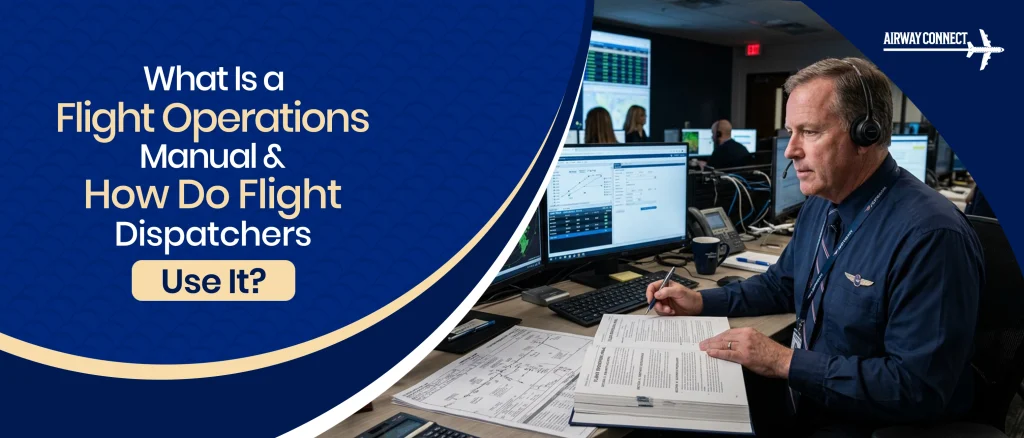
A flight operations manual turns airline policy, regulatory requirements, and company procedures into instructions dispatchers can apply during a live operation. It gives the dispatcher a controlled reference when a flight plan becomes complicated.
For a new dispatcher, finding a definition is usually straightforward. The harder skill is identifying which company procedure controls a decision, then applying it quickly enough to support the flight.
What Is a Flight Operations Manual?
A flight operations manual is typically an airline-controlled source of operating policies, responsibilities, and procedures used by personnel conducting flight operations. Its exact title, structure, and place within the carrier’s broader manual system can vary.
The term itself is not a universal FAA title for the manual required of every Part 121 operator. What the regulations require is a current manual system containing the information personnel need to perform their duties safely.
Under U.S. Part 121 rules, certificate holders must prepare and keep current a manual for the use and guidance of flight, ground-operations, and management personnel. The current 14 CFR § 121.135 manual requirements specifically address dispatching, operational control, routes, airports, weather hazards, performance, emergencies, and related duties.
An airline operations manual of flight operations is often a company’s title rather than a universal FAA-defined document name. Under Part 121, carriers may organize required operating policies and procedures across several manuals or manual sections.
FAA guidance also distinguishes those company operating manuals from an FAA-approved flight manual. Depending on the aircraft and operation, an approved flight manual may be an Airplane Flight Manual (AFM), Rotorcraft Flight Manual (RFM), Powered-Lift Aircraft Flight Manual (PLAFM), or Company Flight Manual (CFM).
Company Operations Manuals, Approved Flight Manuals, OpSpecs and MELs Serve Different Jobs
A dispatcher may move between several controlled references during a single shift. The company FOMl may establish the workflow, while another document supplies the specific authorization, limitation, equipment condition, or aircraft data needed for the decision.
- Operator’s general manual: company policies, employee duties and responsibilities, operational-control procedures, and instructions for conducting operations.
- Operations Specifications (OpSpecs): FAA-issued authorizations, limitations, and conditions applicable to the certificate holder.
- Minimum Equipment List (MEL) and CDL: conditions and procedures governing operation with specified inoperative equipment or permitted configuration deviations.
- FAA-approved flight manual: an AFM, RFM, PLAFM, or approved CFM containing applicable aircraft operating limitations, procedures, and performance information.
- Dispatcher procedures or manual sections: company procedures covering dispatch releases, flight monitoring, communications, irregular operations, and recordkeeping.
A Simple Source-Order Habit
A dispatcher should understand where these references connect and which source governs the issue being checked. Good manual use starts with source recognition, revision awareness, and a clear decision trail.
What Does a Flight Operations Manual Contain for Dispatchers?
The manual should place company expectations close to decisions dispatchers actually make. For a Part 121 dispatcher, several sections become recurring working references throughout a normal shift.
Common areas include:
- Operational-control responsibilities and dispatcher authority
- Dispatch-release preparation and amendment procedures
- Weather review and airport suitability
- Fuel-planning and alternate procedures
- MEL/CDL coordination
- Route, navigation, and communication procedures
- Weight, balance, and aircraft-performance responsibilities
- Flight monitoring and crew communication
- Diversion, emergency, and irregular-operation procedures
- Revision control, bulletins, and temporary changes
Understanding a dispatcher’s operational-control responsibilities also makes the manual easier to navigate, because each procedure can be connected to a real decision involving the release, crew, aircraft, or changing flight conditions.
Those procedures become especially important when several operational factors change at once. Equipment status, weather, payload, or airport conditions may force the dispatcher to reassess the original plan and work through multiple references.
Build stronger reference habits before those decisions become time-sensitive.
Organize regulations, technical subjects, training material, and career preparation around the work dispatchers actually perform.
How Flight Dispatchers Use the Manual Before Release
Before departure, the dispatcher combines regulatory requirements with airline-specific procedures. The flight operation manual helps turn weather, aircraft status, routing, fuel, performance, and airport information into an operationally acceptable release.
Start With the Full Operational Picture
Begin with the aircraft, route, weather, NOTAMs, fuel, alternates, payload, performance, and deferred items. Then locate the company procedure governing anything that needs interpretation, approval, or additional coordination.
A deferred item, for example, may affect routing, altitude, fuel, airport suitability, or performance. The dispatcher checks the applicable MEL procedure, related company instructions, and the established release workflow.
This same reference habit appears during FAA dispatcher ADX written exam preparation: identify the governing subject, retrieve the correct information, and apply it accurately. Airline work adds carrier procedures and current operating authorizations.
How the Manual Supports Dispatch Releases
A release has to describe the operation the airline is prepared to conduct. The manual establishes how dispatchers prepare, check, communicate, amend, and retain that release.
For domestic Part 121 operations, the dispatcher and pilot in command share responsibility for preflight planning, delays, and the dispatch release. Company manuals translate that responsibility into an airline-specific workflow.

How Dispatchers Use the Manual After Departure
The dispatcher’s responsibilities continue after the aircraft leaves the gate. The FOM stays relevant during flight monitoring because weather, airports, ATC constraints, and aircraft conditions can change en route.
A developing thunderstorm line, runway closure, deteriorating destination, ATC restriction, or system issue can trigger another reference check. The dispatcher evaluates the applicable procedure and communicates information needed for continued safe operation.
Diversions Pull Several References Together
A diversion may involve airport suitability, fuel, weather, MEL limitations, crew coordination, and company notification procedures simultaneously. The manual keeps those actions connected to the carrier’s approved operating process.
A strong dispatcher also knows when another controlled source must enter the decision. The manual provides the workflow while current operational information and applicable technical documents provide the inputs.
Turn technical knowledge into airline-style decision-making.
Practice weather, regulatory, operational-control, and irregular-operation scenarios in the format commonly encountered during dispatcher screening.
Why Company Manuals Challenge New Dispatchers
Dispatcher school develops knowledge of regulations, meteorology, navigation, performance, and planning. Airline training then adds company aircraft, OpSpecs, software, routes, manuals, local procedures, and internal coordination paths.
The volume can feel heavy during the first weeks. A manual becomes easier to navigate when the dispatcher organizes it around recurring operational decisions and frequently used references.
Build a personal index around alternate requirements, MEL implications, fuel additions, redispatch, airport restrictions, emergency authority, communication failures, and release amendments. Record the controlling section beside each subject.
The same retrieval skill appears in practical exam scenario work. You locate an appropriate source, explain what it means, and show how the information changes the flight being evaluated.
Flight Operations Manual vs. Other Dispatcher References
Knowing which source controls a question saves time on a busy desk. A company flight manual may direct the dispatcher’s workflow, but it does not replace the carrier’s OpSpecs, MEL/CDL, approved aircraft flight manual, regulations, or current operational information.
A practical sequence is to identify the governing regulatory requirement or authorization, find the applicable company procedure, verify aircraft or equipment limitations, and then apply current weather, airport, and flight information.
The current Aircraft Dispatcher Practical Test Standards reflect this reference-heavy environment. The FAA’s current standard expects candidates to work with regulations, manuals, OpSpecs, MEL/CDL material, charts, weather information, and flight-planning documents.
How to Study a Flight Operations Manual for Airline Training
Study the flight manual in short decision blocks. Pick one operational problem, identify every reference involved, then practice explaining the decision in the sequence you would use on a dispatch desk.
That source-selection habit begins during flight dispatcher training course, where students learn to work between regulations, weather products, aircraft performance data, navigation references, and complete flight-planning scenarios.
A useful weekly rotation can include:
- One weather-and-alternate scenario
- One MEL-driven planning change
- One performance or payload restriction
- One diversion or redispatch case
- One communication or irregular-operations procedure
Track revisions during study sessions. A remembered procedure has value when the section remains current, applies to the operation, and is supported by the appropriate company or regulatory source.
Flight dispatcher career resources and interview prep become especially useful once you can explain where a procedure comes from and how it affects a flight. That ability carries directly into technical screening and airline training.
Make the Manual Part of Your Dispatch Thinking
A flight operations manual becomes valuable when you can move from a changing condition to the correct source, company procedure, and operational action. That habit supports accurate releases, clear crew communication, and defensible decisions.
Airway Connect helps aspiring and working dispatchers continue that development through career resources, technical interview preparation, airline research, job tools, and dispatcher-focused learning material. The certificate establishes eligibility, while disciplined operational preparation helps turn it into an airline career.
Frequently Asked Questions
Is a flight operations manual required by the FAA?
Part 121 operators must maintain a current manual system for operational personnel. Airlines can organize and name individual manuals differently, so an FOM may sit within a broader GOM or user-manual structure.
Is a flight operations manual the same as an Aircraft Flight Manual?
They are different documents with separate functions. The FOM contains company operating policies and procedures; an Aircraft Flight Manual contains approved aircraft limitations, performance information, and other aircraft-specific material.
Do flight dispatchers have to memorize the entire manual?
Dispatchers need strong familiarity with frequently used procedures and efficient reference skills. Accurate retrieval matters because manuals, OpSpecs, MEL provisions, temporary bulletins, aircraft status, and operational conditions can change.
How often is a manual of flight operations updated?
There is no universal revision interval for every section. Operators keep required manuals current and issue changes as regulations, authorizations, fleets, procedures, equipment, or operational requirements change.
Can the public access an airline’s flight operations manual?
Many airline operational manuals are controlled company documents and are not distributed as public training material. Employees receive the portions needed to perform their assigned duties under the operator’s manual system.
Which manual topics matter most to a new flight dispatcher?
Start with operational control, releases, weather and alternates, fuel, MEL/CDL procedures, airport limitations, flight monitoring, diversions, emergencies, and communication. Those subjects recur throughout dispatcher training and operational work.